
Learning from Joe Hisaishi's Creative Process
Inspiration from a master composer and music director

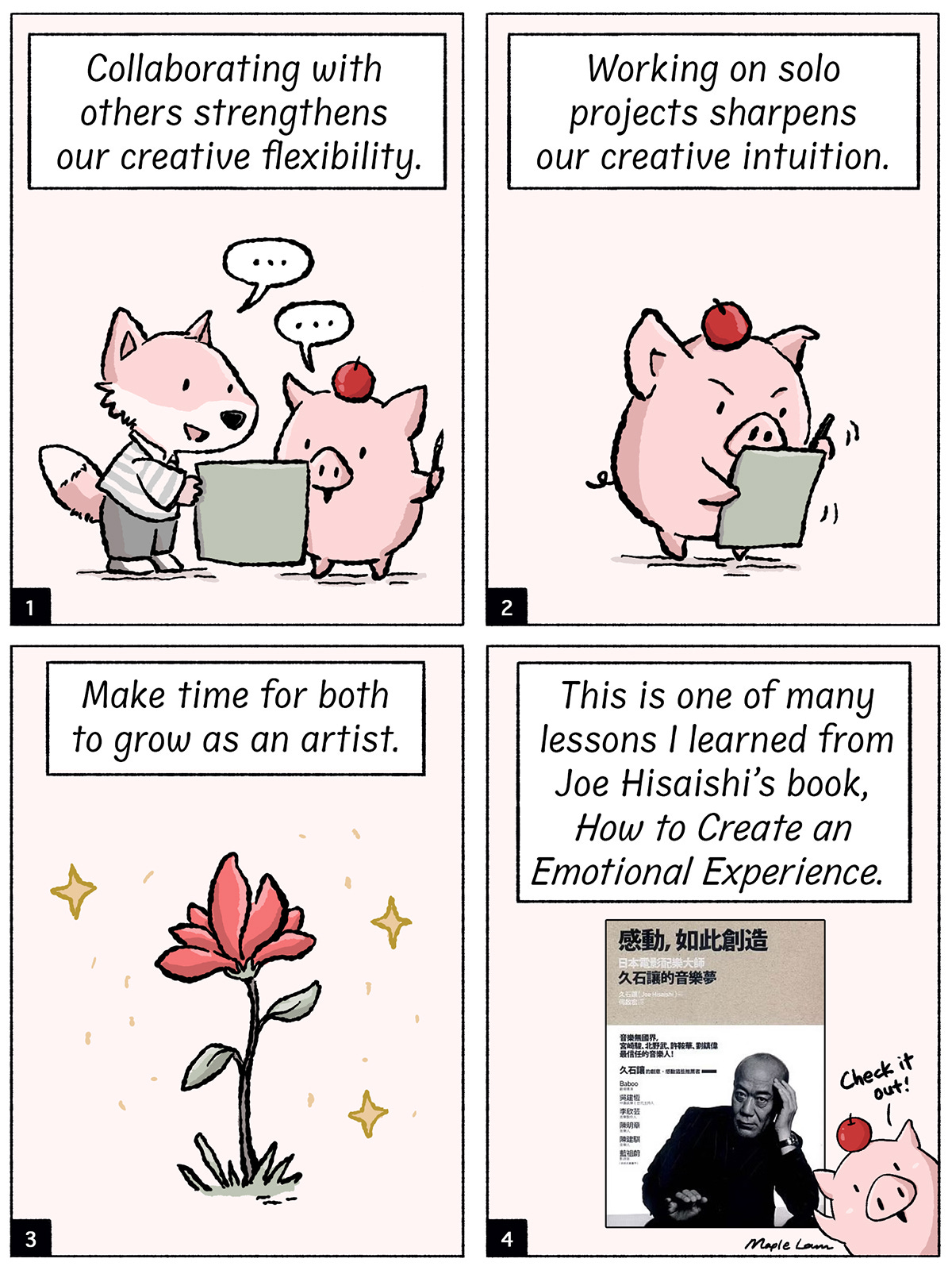
Last week, a few kidlit friends and I enjoyed a lovely SoCal evening over cheese, wine, bánh mì sandwiches, and scones as we attended the Joe Hisaishi’s performance with the Los Angeles Philharmonic at the Hollywood Bowl. It was the perfect summer night to be outdoor and to bask in wonderful music.
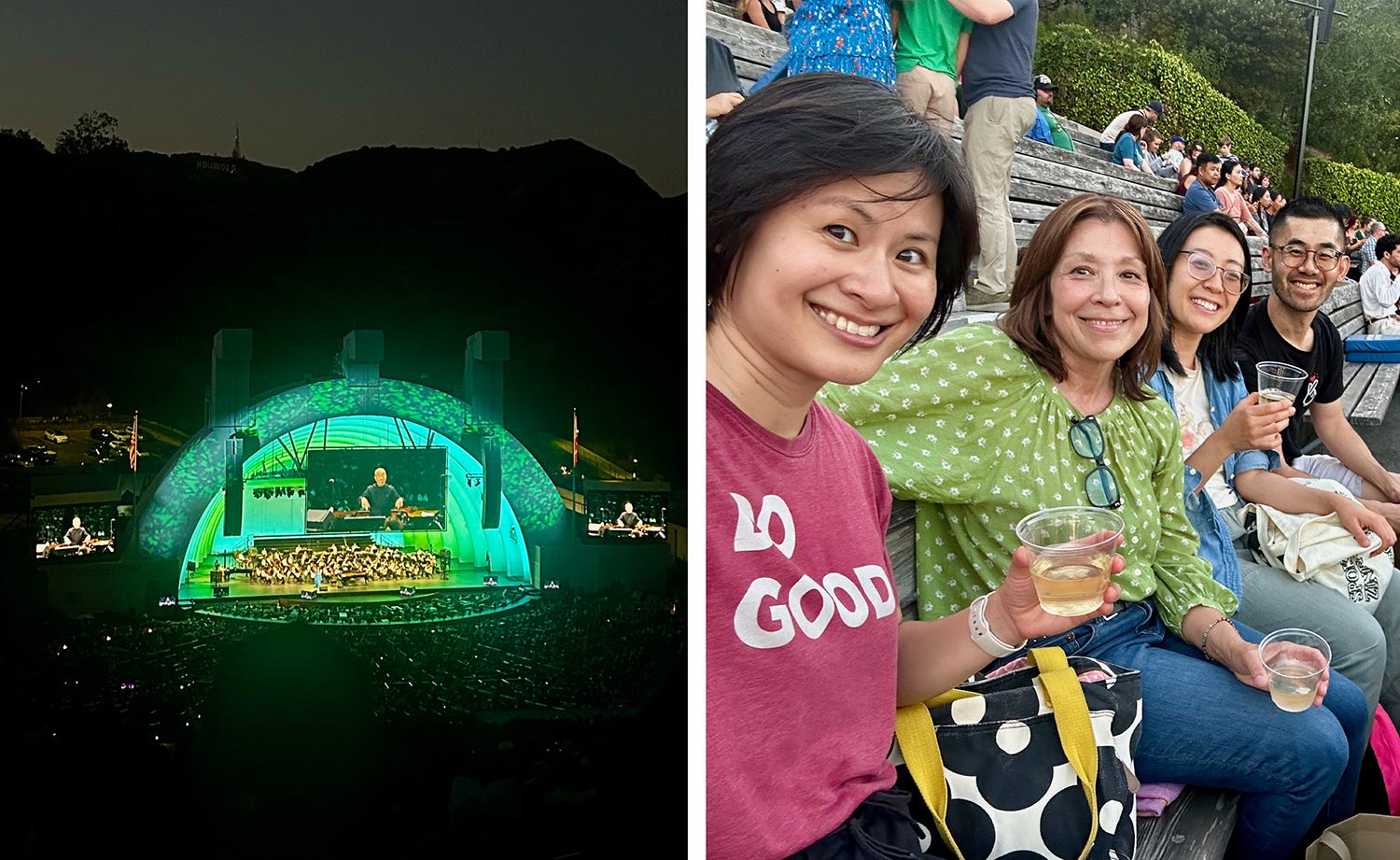
Years ago, I read Hisaishi’s book about his creative philosophy. Originally written in Japanese, the Chinese translated title is 《感動, 如此創造》, which might be loosely translated as How to Create an Emotional Experience (To the best of my knowledge, the book does not have an English edition. I hope a publisher picks it up some day. It’s a great book!)
According to Hisaishi, the core of creativity lies in intuition. And to develop razor-sharp intuition, we must draw heavily upon our past experiences.
I like this interpretation of creativity. When I am working on my graphic novels, imagining scenes and dialogues, many of the beats and pace are intuitive. Yes, if asked, I can usually explain retroactively why I decided to give a pause at a scene, or move through a scene as quickly as possible. But during the creative process, I mostly put down what feels right. That is not to say there won’t be editing and revisions later, but I also trust my instincts at the time. Years of reading comics and graphic novels and stories, along with different life experiences, help me build those instincts.
And how do we sharpen our intuition on a regular basis?
Hisaishi writes that when something piques his interest, he recognizes that it stirred something inside him. He takes that response as a signal: this may be something worth paying attention to, something that can help sharpen his creative intuition.
I find this useful. I try to pay close attention to anything that tugs at my heartstrings, even if the tug is very light. Part of the creative process is to translate those emotions, big or small, into our artistic expression. In my case, that expression usually takes the form of comics or illustrations. Stories, after all, often depict the growth and changes in emotions.
Hisaishi also offers another tip for keeping our creative ideas fresh:
“Aside from movie and commercial projects, I also write my own songs and release them as singles. Since these solo projects are not constrained by other people’s parameters, I get to express what I truly want. I never know. I may end up creating something quite interesting, as long as I try.”
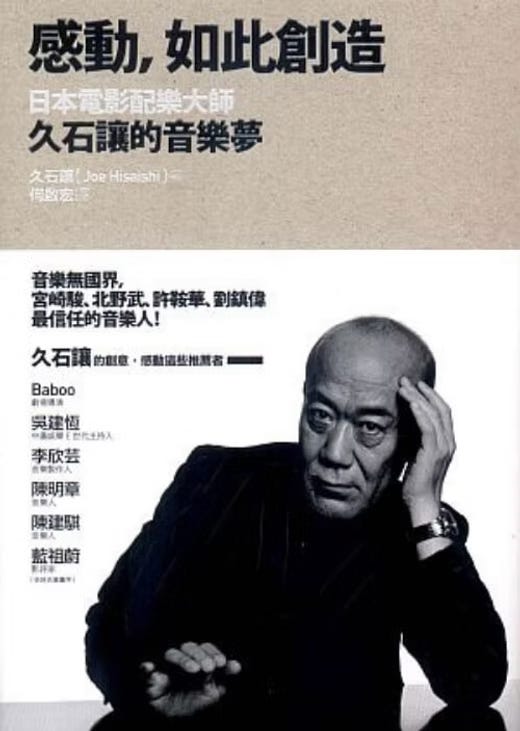
Hisaishi finds tremendous value in collaborating with others on projects, especially because collaboration nurtures his ability to remain flexible as a creative person. But he also sees the importance of maintaining his own creative vision. Independent projects allow him to preserve and develop his individual voice.
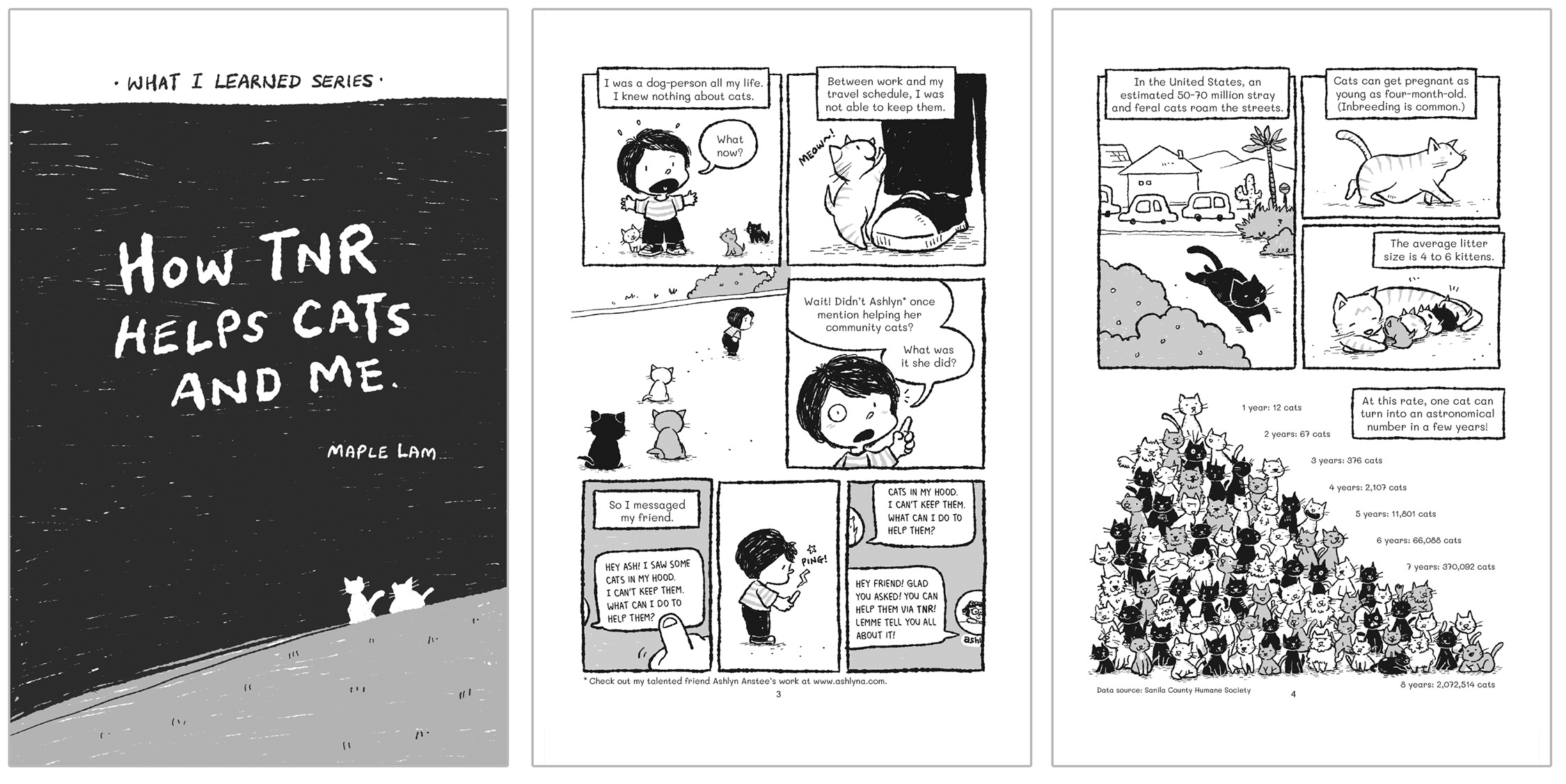
I agree with this approach wholeheartedly. However busy I am, I try my best to maintain at least one independent project every year. They usually come in the form of short comic zines. Not only do I get a lot of joy making them, I also get to sharpen my creative and storytelling skills, and I get to share those stories with others.
Now, back to my projects while listening to one of my favorite soundtracks: Hisaishi’s score for Princess Mononoke.

How do you keep your creativity fresh? Do you also work on small, independent projects on the side? Share your thoughts in the comments below. I’d love to learn from you.